
PINCHA EN LOS ENLACES PARA JUGAR CON EL VOCABULARIO SOBRE ACTIVIDADES EN INGLÉS
PINCHA EN LOS ENLACES PARA JUGAR CON EL VOCABULARIO SOBRE ACTIVIDADES EN INGLÉS
PINCHA EN LOS ENLACES PARA JUGAR CON LOS ADJETIVOS EN INGLÉS
ANAGRAMA (Pon las letras en orden para formar la palabra)
WORD ORDER (Reordena las palabras para forma la frase)
READ AND CHOOSE (Lee y elige)
IS THERE..? (Reordena las palabras para formular la pregunta)
HAVE TO, DON’T HAVE TO, HAS TO, DOESN’T HAVE TO
OBJECTS AND MATERIALS:
a cotton t-shirt – una camiseta de algodón
a wool jumper – un jersey de lana
a silk scarf – un pañuelo / bufanda de seda
a leather belt – un cinturón de cuero
a metal bracelet – un brazalete de metal
rubber boots – botas de goma
a plastic car – un coche de plástico
a glass bottle – una botella de cristal
a wooden train – un tren de madera
a paper plane – un avión de papel
THE STORY:
rucksack – mochila
map – mapa
fire – fuego
whistle – silbar
blanket – manta
torch – linterna
OBLIGATION: HAVE TO / DON’T HAVE TO
Utilizamos “have to” para hablar de obligaciones, generalmente externas (normas, leyes, etc.):
*Recordamos que detrás de «to» siempre le sigue un verbo principal, y SIEMPRE va en infinitivo o forma base.
Afirmativa
sujeto + have to / has to + verbo en infinitivo
have to = I, you, we, they
has to = she, he
Ejemplos:
I have to wear a school uniform – Yo tengo que llevar puesto el uniforme escolar.
She has to take rubber boots – Ella tiene que llevar botas de goma.
Negativa
sujeto + don’t have to / doesn’t have to + verbo en infinitivo
don’t have to = I, you, we, they
doesn’t have to = she, he
Ejemplos:
They don’t have to buy a present – Ellos no tienen que comprar un regalo.
He doesn’t have to go to the post office – El no tiene que ir a la oficina de correos.
PAST SIMPLE: QUESTIONS & SHORT ANSWERS
En el tema pasado ya vimos las formas afirmativa y negativa del pasado simple, las cuales os recomiendo que os estudiéis para este tema también. Ahora vamos a ver la forma interrogativa y las respuestas cortas, con SI y con NO.
Recordamos que el pasado simple se usa para hablar de un hecho que ocurrió en el pasado y que terminó.
Question:
DID + sujeto + verbo en infinitivo + sustantivo/complemento ?
Affirmative answer:
Yes, + sujeto + did.
Negative answer:
No, + sujeto + didn’t.
Ejemplos:
– Did you see a river? – ¿Viste un río?
Yes, I did. – Si, lo ví. / No, I didn’t. – No, no lo ví.
– Did she wear a waterproof jacket? – ¿Llevaba ella puesto una chaqueta impermeable?
Yes, she did. / No, she didn’t.
Coger: take – took
Ir: go – went
Hacer: make – made
Llevar puesto: wear – wore
Aprender: learn – learnt / learned
Jugar: play – played
Hacer: do – did
Tener: have – had
Cruzar: cross – crossed
Alimentar: feed – fed
Querer: want – wanted
Escuchar: hear – heard
Ser o estar: be – was / were
Navegar: sail – sailed
Visitar: visit – visited
Escalar: climb – climbed
Llegar a ser: become – became
Mirar: look – looked
Andar: walk – walked
Usar: use – used
Hervir: boil – boiled
Ayudar: help – helped
Obtener: get – got
Comprar: buy – bought
FICHA INTERACTIVA DEL VOCABULARIO DE LA UNIDAD 5
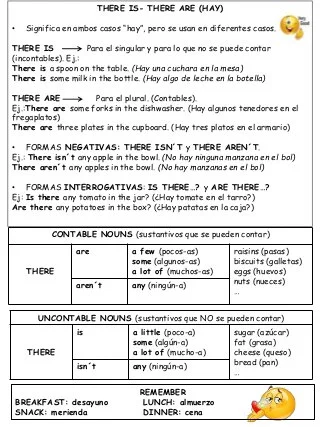
para alimentos incontables (fruit, meat, fish…)
Are there…? Yes, there are / No, there aren’t

Vocabulary
raisins: pasas
seeds: semillas
a few: unos pocos
a lot of: un montón
a little: un poco


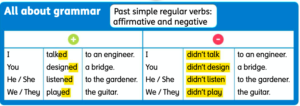


Simple Past Tense (Regular Verbs)
PAST SIMPLE TENSE – regular verbs (affirmative)
Past Simple Regular Verbs – Video
(LISTA DE VERBOS IRREGULARES Y PRONUNCIACÍON DE LOS VERBOS REGULARES)
Irregular Past Tense Verbs Match